San Marino
Along the streets you can stroll between shopping and relaxation, tasting of typical dishes, guided tours in the most extravagant museums, such as the Museum of Curiosities located in Via Salita alla Rocca, the Museum of Torture, at the Gate of San Francesco, also known as the Gate of the Country, the Wax Museum, and also Museums culturally appreciated in the world, such as the State Museum and the Gallery of the Cassa di Risparmio di San Marino.
Open-air monuments only numerous including the Palazzo Pubblico, also known as the Government Palace, home to San Marino institutions such as the Great and General Council (the Parliament). On the way up you can visit the Old Parish Church and the Basilica of Saint Marino, in which you can access the beds carved into the rock by Marino and Leo, who later moved in and founded San Leo. The place in which the Pieve is located represents the oldest site that testifies to the presence of an autonomous community, which the legend of the Saint places as far back as 301 A.D. the date of the founding of the Republic, but which official documents date to its full independence between 885 A.D. (Placito Feretrano) and 1070 A.D. (documentation from the State Archives).
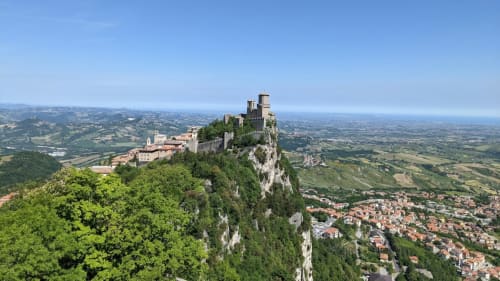
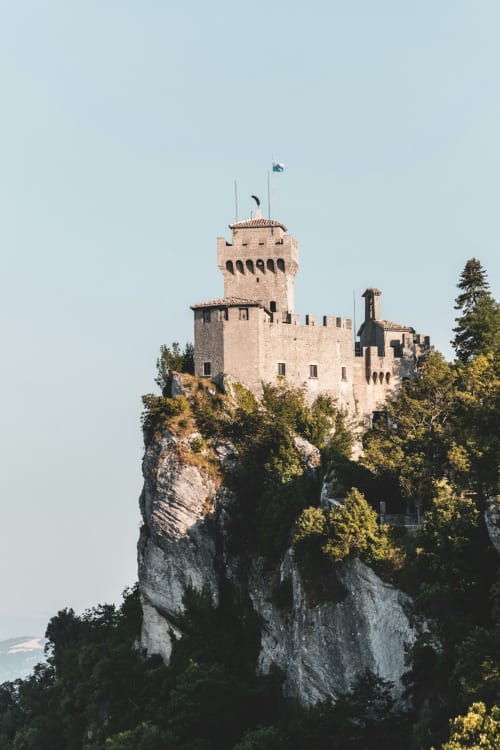
The Towers and fortifications of the Mount cannot be missed during your visit starting from the Guaita (First Tower) and moving on to the Cesta (Second Tower) along the Witches' Pass and finally to the Montale (Third Tower)
Image with text
Image with text
Image with text
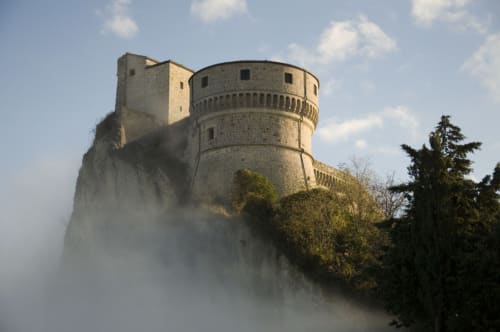
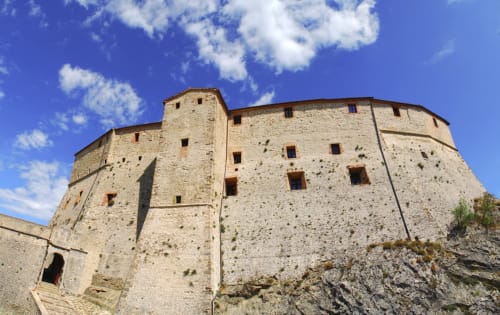
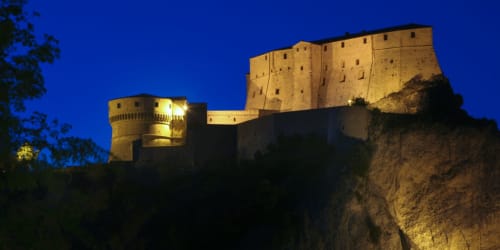
Saint Leo
Great figures of History such as Umberto Eco, and even earlier Dante Alighieri, speak of San Leo. Umberto Eco, an honorary citizen of this village, described San Leo as the most beautiful town in Italy, consisting of a fortress and two churches. It is a medieval fortress, the historic Capital of Montefeltro. The center of San Leo though small, which can be visited in a few hours, is a real jewel. Umberto Eco also finds inspiration in his great works from the landscapes of Montefeltro and also from this town, taken up according to some scholars also in his famous work "The Name of the Rose."
Cannot be forgotten among the places of high artistic and urbanistic value, the medieval village of Monte Grimano, awarded as one of the most beautiful Ancient Villages of Italy. A short visit will be a must, even if only by moving around on a pedal-assisted bicycle, which allows even those who are not at all trained, to travel more than 80 km a day with ease.
In fact, an innovative and green way to visit these sites is to use the many historic trails and paths that allow you to discover an area rich in rural history, scents and flavors enhanced even more than the food and wine culture.
By mountain bike or e-bike, it will then be possible to discover all the otherwise inaccessible secrets of this splendid territory.
Image with text
Image with text
Image with text